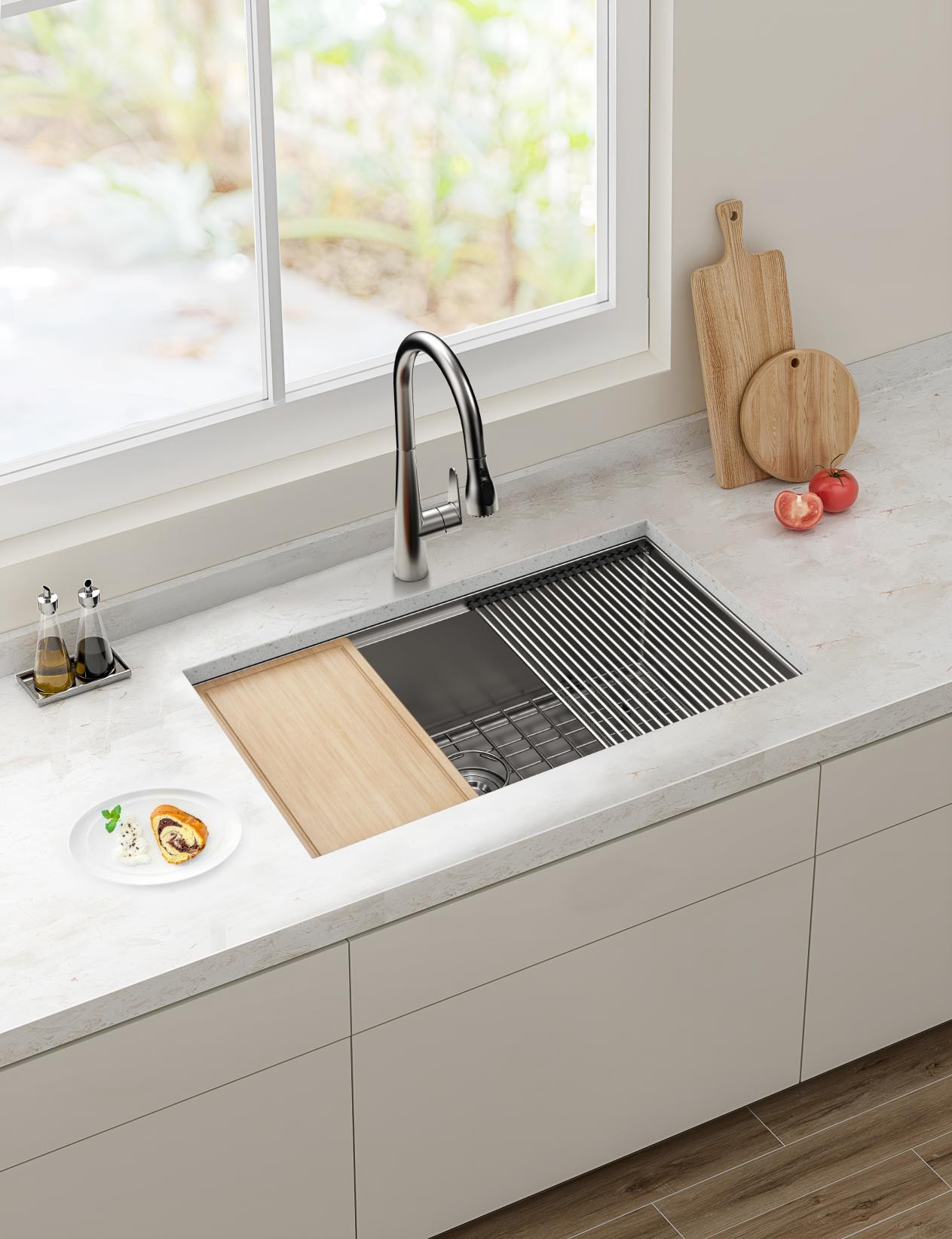
Even 304 stainless steel sinks, despite their excellent corrosion resistance, may occasionally develop surface rust (also known as 'flash rust') due to residual construction dust in the air during new home renovations. This is usually caused by tiny iron particles or chemical residues in the dust reacting with moisture, not a flaw in the sink itself. Here’s how to prevent such issues and maintain your 304 stainless steel sink effectively:
Prevention During Renovation
· Temporary Protection: Cover the sink with a thick, clean plastic sheet or a soft cloth during renovation. Secure the edges to prevent dust from settling on the surface. Avoid using materials like newspaper, as the ink may transfer and stain the sink.
· Regular Cleaning: Even with coverage, wipe the sink with a damp microfiber cloth every 2-3 days to remove any dust that manages to accumulate. This prevents iron particles in the dust from reacting with moisture over time.
· Ventilation: Ensure proper ventilation in the kitchen during and after renovation. Open windows or use fans to reduce the concentration of dust and chemical fumes in the air, which helps minimize the risk of corrosion.
Daily Maintenance Tips for Long-Term Care
1. Initial Cleaning After Renovation: Once the renovation is complete, give the sink a thorough deep clean. Mix warm water with a mild dish soap, then use a soft sponge to scrub the entire surface, including the drain area and corners. Rinse thoroughly with clean water and dry with a soft towel. For stubborn dust deposits, you can use a non-abrasive cleaner specifically designed for stainless steel.
1. Routine Cleaning: After each use, rinse the sink with warm water to remove food residues, soap scum, and other debris. Wipe it dry with a clean towel to prevent water spots and mineral deposits, especially in areas with hard water. Avoid using steel wool, abrasive sponges, or harsh chemicals (such as bleach, ammonia, or oven cleaners), as they can scratch or damage the stainless steel surface, making it more susceptible to rust.
1. Periodic Deep Cleaning: Every 1-2 weeks, depending on usage, perform a deeper clean. You can use a mixture of baking soda and water to form a paste, apply it to the sink surface, and let it sit for 10-15 minutes. Then, scrub gently with a soft sponge and rinse thoroughly. Baking soda is a mild abrasive that helps remove stains without harming the stainless steel.
1. Avoiding Potential Risks: Do not leave wet steel wool, iron cookware, or other metal objects in the sink for extended periods, as they can cause rust stains. Also, promptly clean up spills of acidic substances (like vinegar, lemon juice, or tomato sauce), as prolonged exposure can affect the sink’s finish.
By following these simple prevention and maintenance steps, you can keep your 304 stainless steel sink looking shiny and new, and ensure its long-term durability even after a new home renovation.